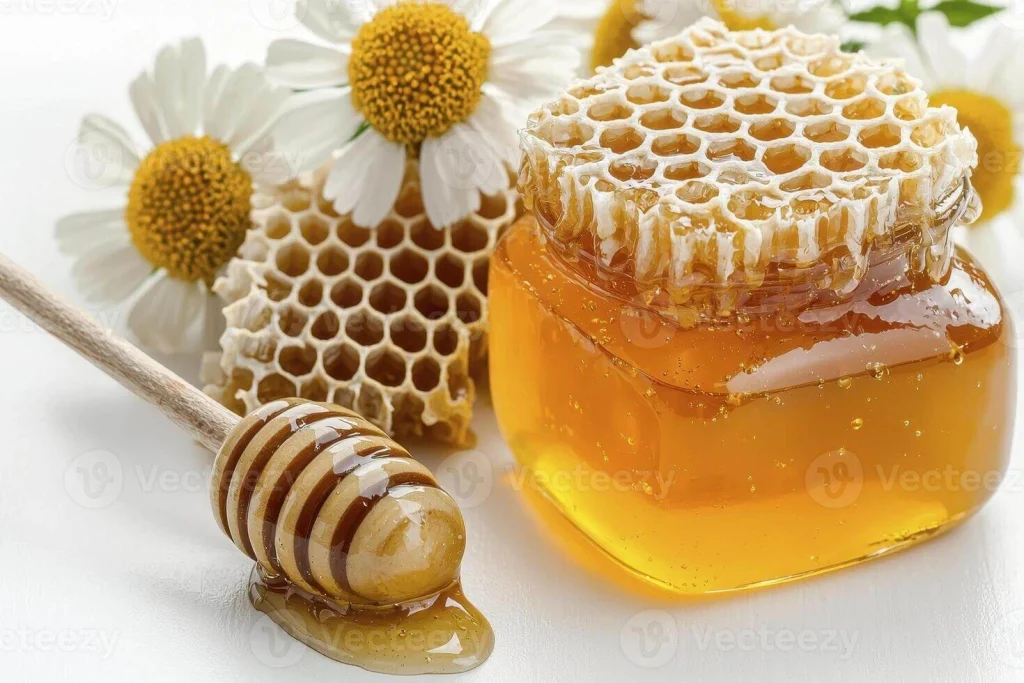
Interest in raw honey in the UK has grown substantially over the past several years, driven by increasing consumer awareness of the difference between genuinely natural honey and the heat-treated, ultrafiltered product that fills most supermarket shelves. But as the raw honey category has grown, so has the confusion — and, inevitably, the opportunistic marketing.
Jars labelled “raw,” “natural,” and “pure” appear at every price point, from budget retailers to specialist health food shops. Not all of them are what they claim. This guide explains what genuine raw honey actually is, what the best raw honey UK producers and importers are providing, and how to tell the difference between a product that deserves its premium and one that is trading on the category’s reputation.
Content
Defining Genuine Raw Honey
Raw honey has a straightforward definition: honey that has been extracted from the hive, strained to remove wax and large particles, and bottled without heating or additional processing of any kind.
The key requirements are:
No heating: Genuine raw honey is never heated above the temperature of a beehive — approximately 35–40°C. Commercial honey production routinely heats to 60–80°C or higher to liquefy crystallised honey, prevent re-crystallisation, and extend shelf life.
No ultrafiltration: Ultrafiltration forces honey through very fine filters under pressure to remove pollen, propolis, and other fine particles. The result is a perfectly clear, uniform-looking product that looks attractive on a supermarket shelf but is nutritionally diminished.
No additives: Genuine raw honey contains only honey. Commercial products are sometimes adulterated with glucose syrup, water, or cheaper honey varieties from other origins.
What raw honey retains — and processed honey loses — includes natural enzymes, pollen, propolis, wild yeasts, and the full spectrum of polyphenol antioxidants. These compounds are not merely incidental. They are central to the nutritional value and bioactive properties of genuine honey.
The Health Evidence for Raw Honey
The research base for honey’s health properties has grown substantially in recent years, and it consistently points to raw, minimally processed honey as the nutritionally meaningful category.
Key documented properties include:
Antimicrobial activity: Raw honey produces hydrogen peroxide through the action of glucose oxidase enzymes — an activity largely destroyed by heat processing. It also contains bee defensin-1, a peptide with antimicrobial properties, and various polyphenols with documented antibacterial effects. This antimicrobial activity is why raw honey has been used as a wound treatment for millennia and continues to be used in clinical settings today.
Antioxidant capacity: Raw honey from botanically rich environments — where bees forage across diverse wildflowers, trees, and plants — typically contains high total polyphenol concentrations. These function as antioxidants, scavenging free radicals and reducing oxidative stress associated with cardiovascular disease, cancer, and accelerated ageing.
Prebiotic function: Raw honey contains oligosaccharides that act as prebiotics — feeding beneficial bacteria in the gut and supporting a healthy microbiome. This function is largely absent from commercially processed honey.
Anti-inflammatory properties: Several compounds found in raw honey — including chrysin, luteolin, and kaempferol — have demonstrated anti-inflammatory activity in research settings. The relevance of these findings to everyday honey consumption is an active area of research.
How to Identify Genuinely Raw Honey
The label alone is insufficient. Here is how to assess whether a honey marketed as raw is genuinely what it claims:
Check for crystallisation: Genuine raw honey crystallises naturally at room temperature, typically within weeks to months of bottling, depending on its sugar composition. Honey that remains perfectly liquid and clear after months on a shop shelf has either been heated or contains additives that prevent crystallisation. Liquid raw honey straight from the hive is possible, but should recrystallise if kept at room temperature for long enough.
Look at the colour and appearance: Raw honey is typically opaque or slightly cloudy, and its colour varies from pale gold to deep amber depending on its botanical source. Perfectly clear, bright, uniform-coloured honey is almost always processed.
Read the ingredient list: Raw honey should contain one ingredient: honey. Any additional ingredients are a red flag.
Check the origin: Honey labelled only as “Product of EU” or “Blend of EU and non-EU honey” has no meaningful traceability. The best raw honeys carry a named region, a named beekeeper or producer, and ideally a harvest season.
Sicilian Raw Honey: Why It Represents the Best
Among the world’s raw honey producing regions, Sicily deserves particular attention. The island’s interior — largely free from intensive agriculture, rich in native wildflowers, citrus, carob, thyme, and other Mediterranean flora — creates beekeeping conditions of exceptional quality.
Raw Sicilian flora honey, produced from bees foraging across this diverse botanical landscape, is among the most complex and nutritionally rich available in the UK market. Its polyphenol content reflects the botanical diversity of its environment; its enzyme activity is fully preserved through traditional, low-temperature extraction; and its flavour — deep, complex, slightly floral, with a rounded sweetness that is quite unlike processed commercial honey — reflects the extraordinary landscape from which it comes.
LAVERDE Artisan imports raw flora honey directly from family beekeepers in the Caltanissetta region of Sicily, using traditional production methods that preserve the honey’s natural bioactive compounds. For anyone looking for the best raw honey UK importers with genuine provenance can offer, it is a benchmark product.
Practical Guidance
Raw honey should be stored in a cool, dark place — not in the refrigerator, which accelerates crystallisation, and not near heat sources, which degrade its enzymes and polyphenols. Crystallised raw honey can be gently warmed by placing the jar in warm (not hot) water — never microwave it.
Use raw honey as you would any honey: on toast, in herbal tea, drizzled over yoghurt or cheese, in salad dressings, or simply eaten from a spoon. The difference in flavour from commercial honey is immediate and unmistakable.
Liz Cook is a health blogger that focuses on topics related to nutrition, fitness, and mental health. She was born in New York City but at age 6 moved to the Midwest where she spent her childhood exploring nature with friends and family. Liz graduated from University of Michigan-Ann Arbor with degrees in psychology & human development.
Liz Cook is a health blogger that focuses on topics related to nutrition, fitness, and mental health. She was born in New York City but at age 6 moved to the Midwest where she spent her childhood exploring nature with friends and family. Liz graduated from University of Michigan-Ann Arbor with degrees in psychology & human development.